


ScratchPad Dog Nail File
- No clippers, no motor noise, no quicking
- Treat drawer turns nail care into a game
- Dogs file their own front nails by scratching
- Replaceable abrasive pads — board lasts for years
- Suits nervous, rescue and paw-shy dogs
Couldn't load pickup availability

TailTrace™ ScratchPad Dog Nail File


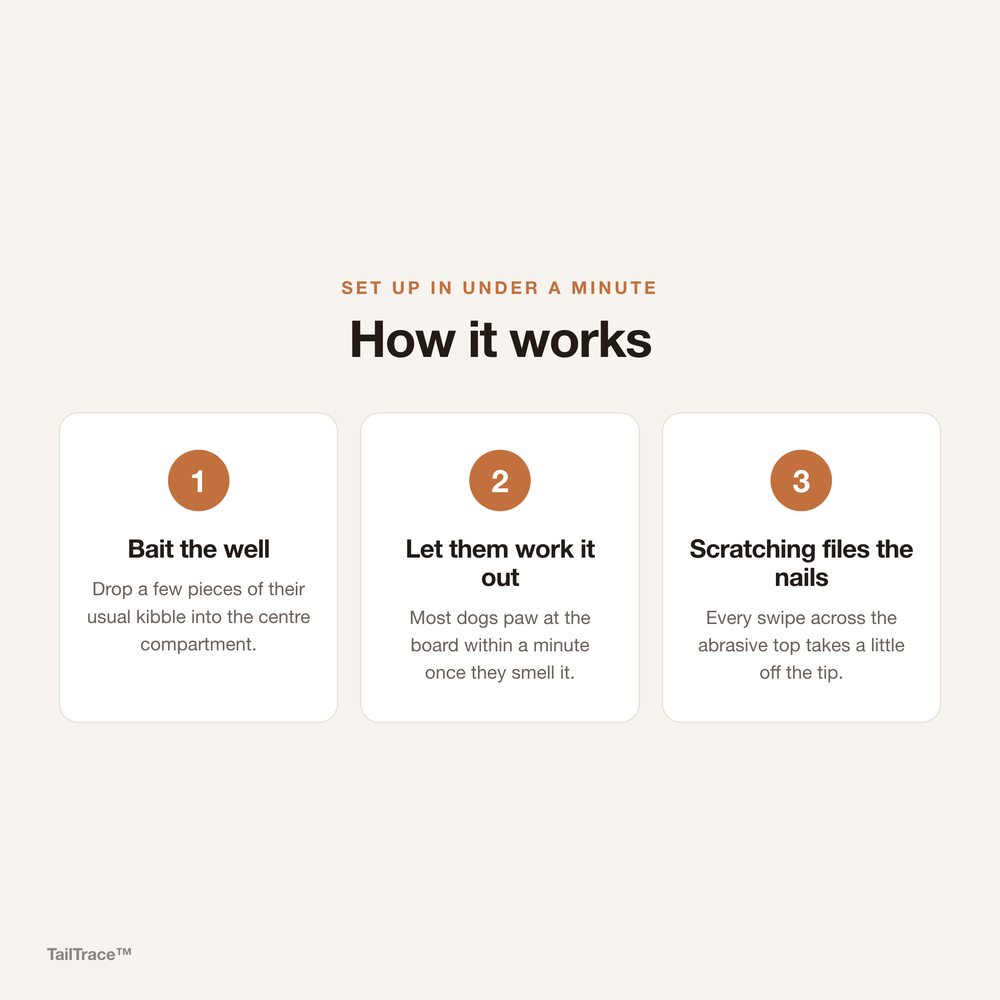
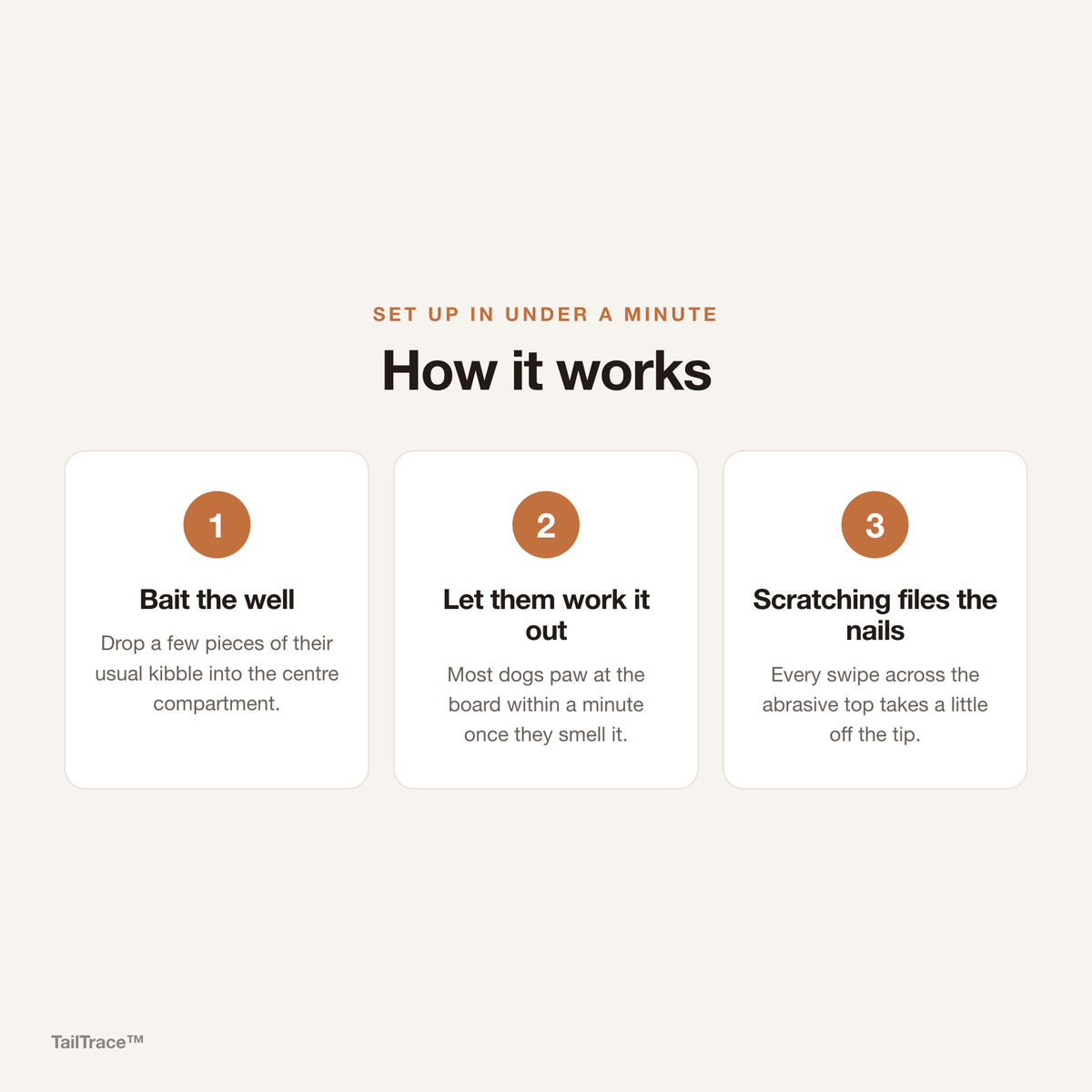
Load it. Show them. Let them scratch.
Bait the drawer
Slide out the centre drawer and drop in a few pieces of their usual kibble or a high-value treat.
Let them work it out
Most dogs paw at the board within a minute or two once they smell the reward. Tap the surface to show them if they hesitate.
Scratching files the nails
Each swipe across the abrasive surface takes a little off the tip. A short session every day or two keeps front nails blunt.
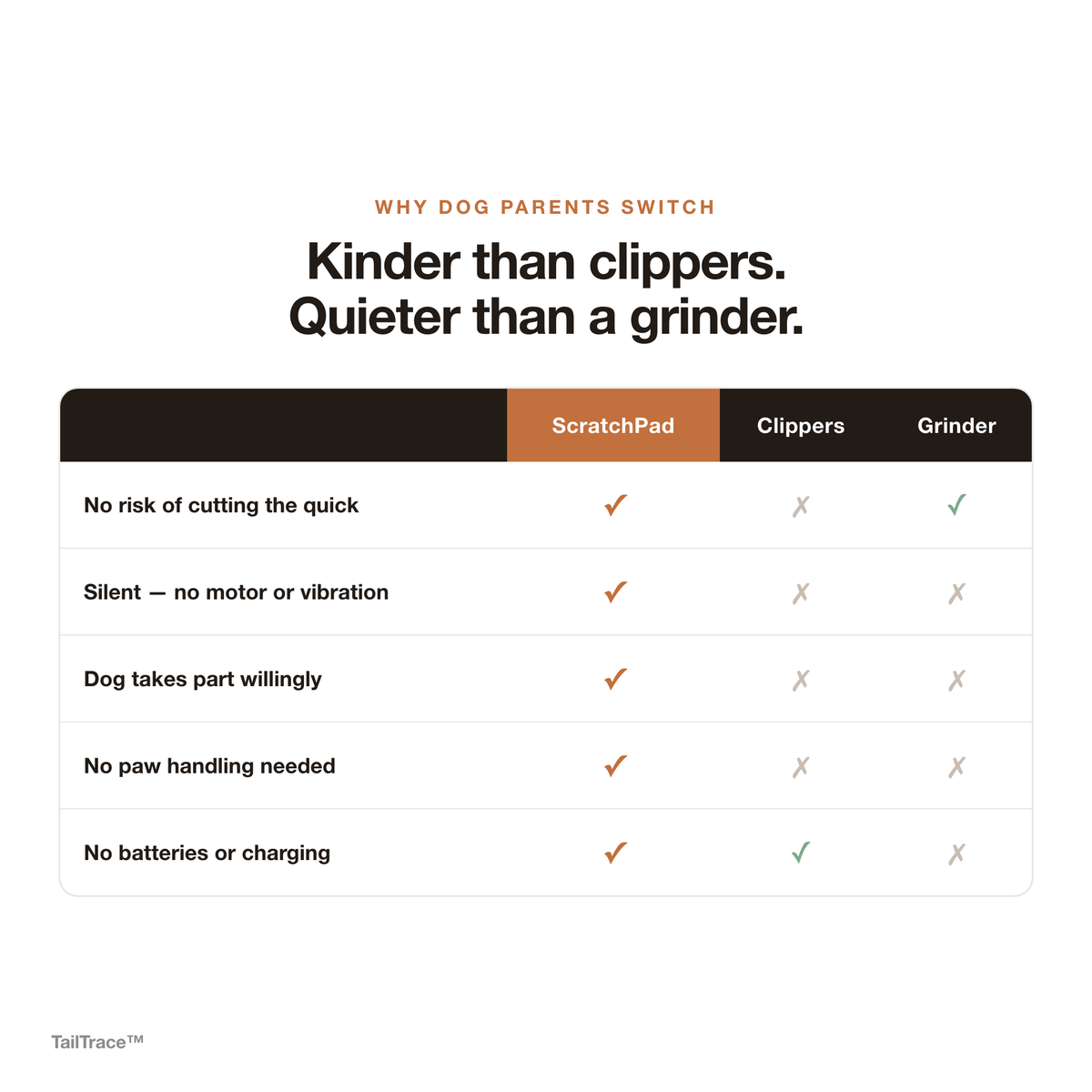
Quieter than a grinder. Kinder than clippers.
| ScratchPad | Clippers | Electric Grinder | Groomer Visit | |
|---|---|---|---|---|
| No risk of cutting the quick | ✓ | ✗ | ✓ | ✓ |
| Silent — no motor or vibration | ✓ | Click | ✗ | Varies |
| Dog participates willingly | ✓ | ✗ | ✗ | ✗ |
| No paw handling required | ✓ | ✗ | ✗ | ✗ |
| No ongoing cost | ✓ | ✓ | Batteries | ✗ |
| Reaches back nails & dewclaws | ✗ | ✓ | ✓ | ✓ |
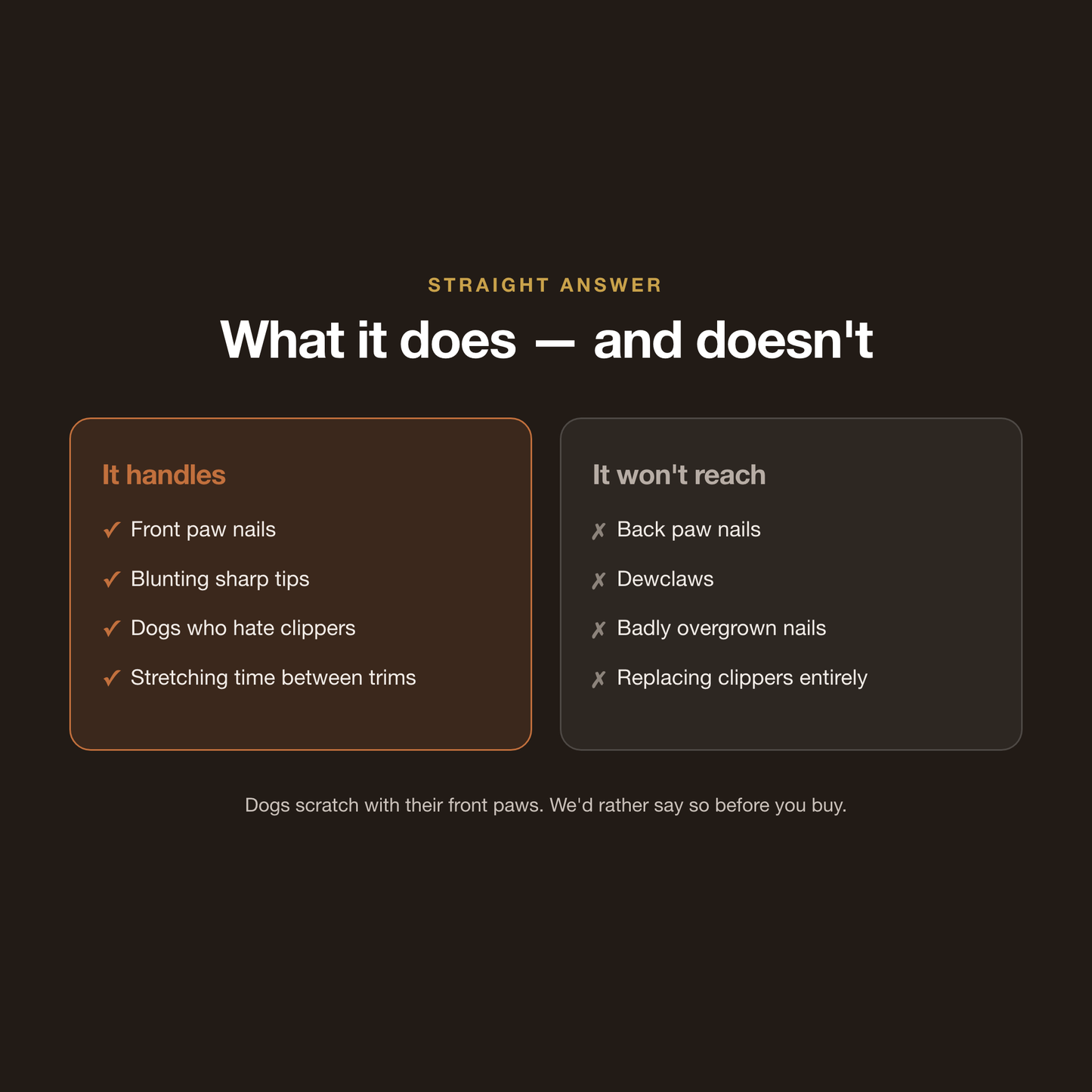
A scratch board handles the front nails your dog can reach on their own. Most owners use it to stretch the gap between trims, not to replace clippers entirely — back nails and dewclaws still need a clip every so often.
Why you'll love it
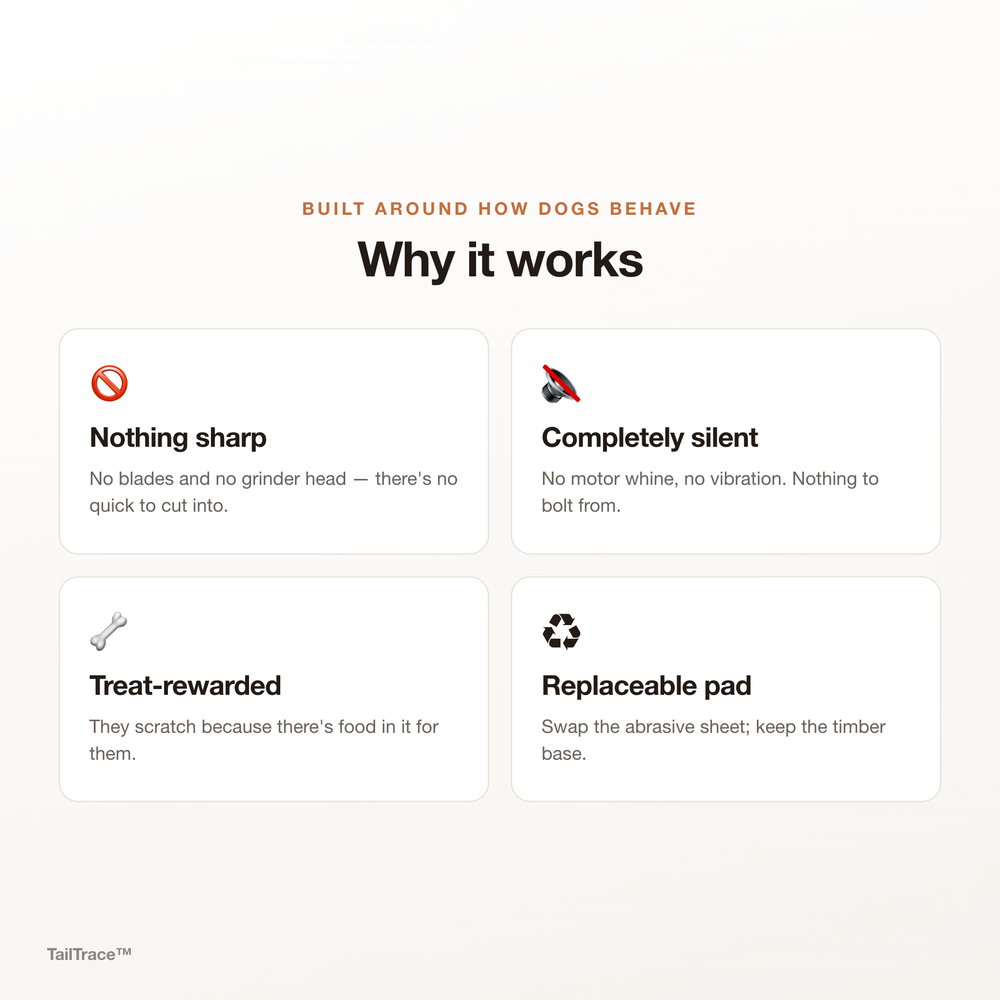
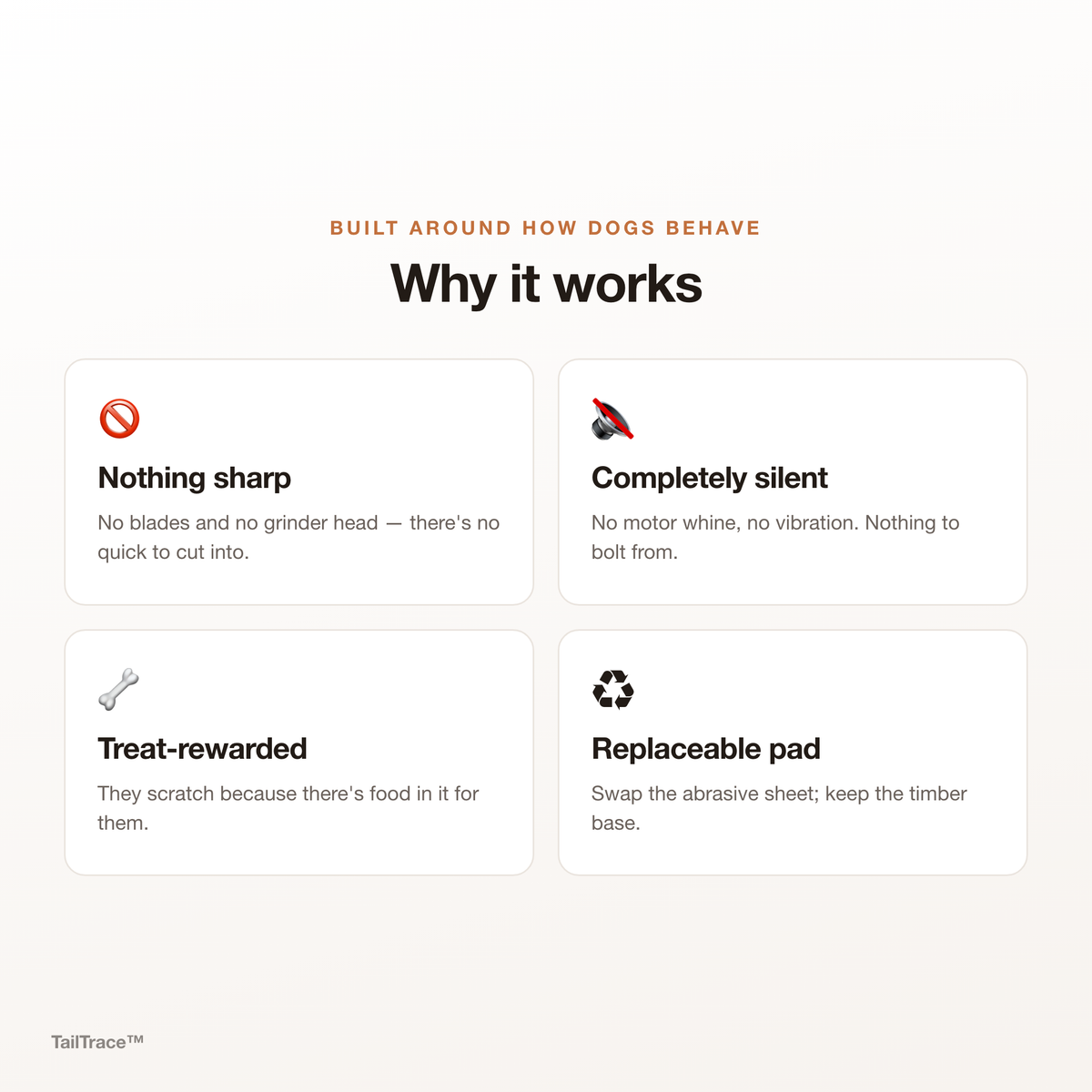
Nothing sharp
No blades and no spinning grinder head, so there's no quick to cut into and no blood-stop powder on standby.
Completely silent
No motor whine and no vibration — the two things that make most dogs bolt from a nail grinder.
They opt in
Your dog chooses to scratch because there's food in it for them. No holding paws, no pinning them down.
Pads swap out
When the abrasive wears smooth, peel it off and stick a fresh sheet on. The timber base keeps going.
If nail day is a two-person job
The situations a scratch board was built for.
“The clippers come out and they're gone — under the bed, behind the couch, anywhere but here. Nobody wins that fight.”
— For the hiders“One bad quick years ago and they've never forgotten it. Now even holding a paw is off the table.”
— For the ones who remember“Rescue dogs with unknown history, seniors who can't be restrained, puppies you'd rather not teach to dread it.”
— For the sensitive onesSpecifications
| Base material | Timber board |
| Filing surface | Replaceable abrasive sheet |
| Treat compartment | Slide-out centre drawer |
| Nails covered | Front paws (back nails & dewclaws still need clipping) |
| Power | None — no batteries, no charging, no motor |
| Noise | Silent in use |
| Suits | All breeds that scratch; best for paw-shy, rescue and clipper-averse dogs |
| Cleaning | Wipe the board; empty and rinse the drawer |
| In the box | ScratchPad board with abrasive surface fitted + quick-start guide |
Free Tracked Shipping
Every order ships free with tracking, Australia-wide and worldwide.
30-Day Money-Back
Give it a fortnight with your dog. If they never take to it, send it back.
Front Paws, Honestly
Scratch boards file front nails. Back nails and dewclaws still need a trim.
Your dog does the work, for a snack.
Hide kibble in the centre compartment and the scratching takes care of itself. It reframes nail care as a food puzzle instead of something that happens to them — which is exactly why paw-shy dogs tolerate it when they won't tolerate clippers.
No noise. No buzz. Nothing to run from.
Most dogs don't object to nail care itself — they object to being held still while something loud vibrates against their paw. Take away the motor and the restraint and the objection usually goes with it.
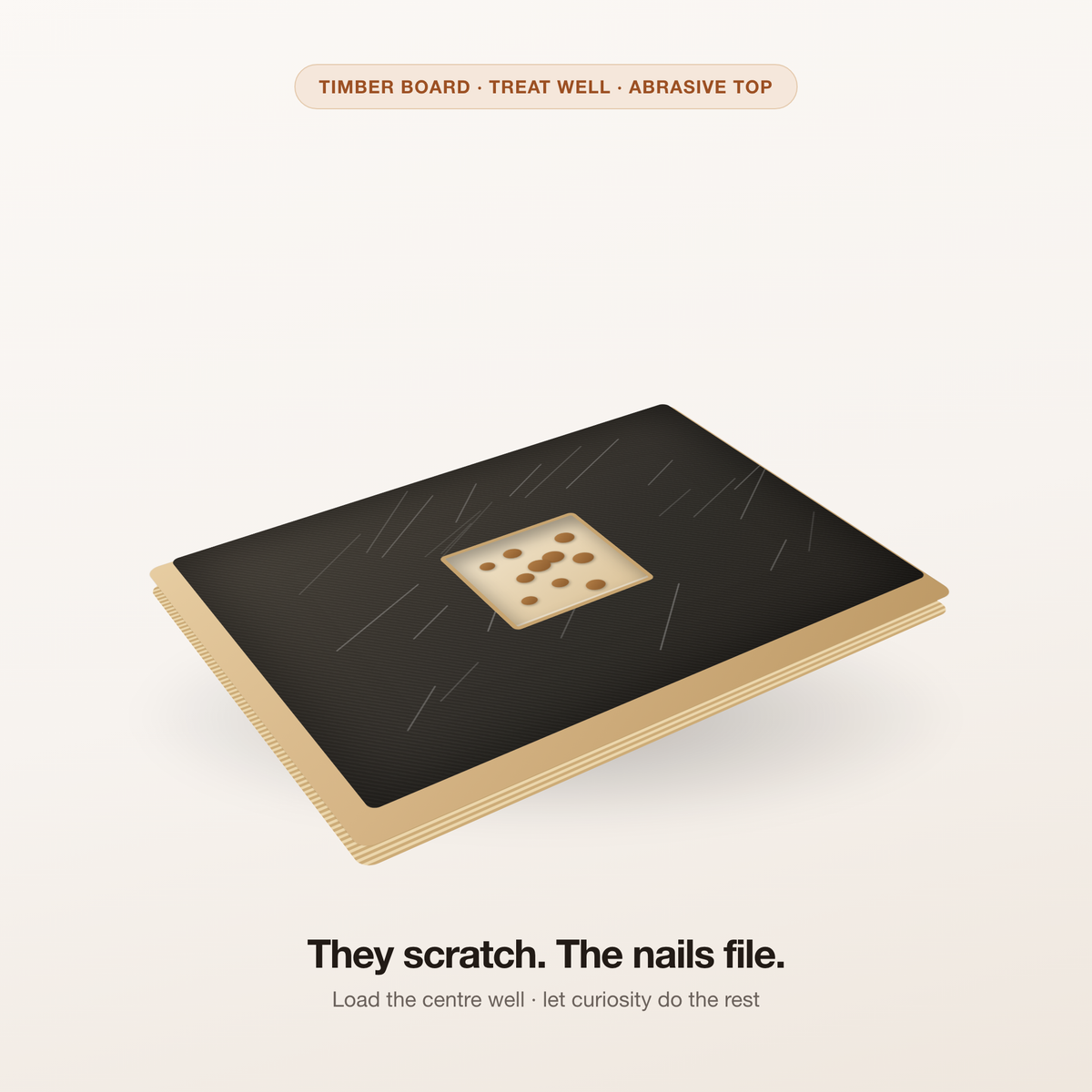
Timber base. Replaceable grip.
The abrasive sheet is the only part that wears, and it peels off and replaces. The timber board underneath is the part you keep — no batteries to buy, no blades to sharpen, nothing to throw away when it dulls.
A board, a drawer, and a very motivated dog
Frequently asked questions
Does this replace clippers completely?
Not completely, and we'd rather say so up front. Dogs scratch with their front paws, so the board files front nails only. Back nails and dewclaws still need clipping — though they usually grow slower and need far less attention. Most owners use the ScratchPad to stretch the gap between full trims from weeks to months.
What if my dog just ignores it?
Some dogs paw at it within seconds; others need a few sessions. Start with a high-value treat rather than plain kibble, tap the board with your hand to draw attention, and reward any contact at first even if it isn't a proper scratch. If they still won't engage after a couple of weeks, the 30-day money-back guarantee covers you.
Is the abrasive surface harsh on their paws?
The grit is chosen to take material off a hard nail, not soft pad tissue — similar to a coarse emery board. Normal scratching contact is fine. As with any nail care, check the nails after the first few sessions and keep sessions short rather than letting them go at it for ten minutes straight.
How often should we use it?
A short session every day or two is plenty for most dogs. Nails wear down gradually rather than all at once, so consistency beats long sessions.
Can I replace the abrasive pad?
Yes. The abrasive sheet is replaceable — peel the worn one off and fit a fresh one, and the timber base carries on. How quickly it wears depends on your dog's size and how often they use it.
Will it work for a big dog? A tiny dog?
The mechanism suits any dog that scratches, from small breeds up to large ones. Very large dogs will wear the abrasive down faster, and very small or elderly dogs may scratch too lightly to make much difference — in that case it works better as a supplement to clipping than a replacement.
What if it doesn't work out?
You've got a 30-day money-back guarantee. If it isn't right for your dog, send it back for a full refund — no fuss.
Nail day doesn't have to be a fight.
Try the ScratchPad risk-free for 30 days. If your dog won't touch it, or it isn't making a difference, we'll refund you in full.
Get the ScratchPad